Since beginning my Bujinkan journey over 40 years ago, I have collected and organized an extensive archive of books, magazines, documents, videos, and training materials — from the early days of Fidonet and CompuServe to the modern internet. This lifelong work has allowed me to structure and document the schools and techniques of Bujinkan in a clear and accessible way.
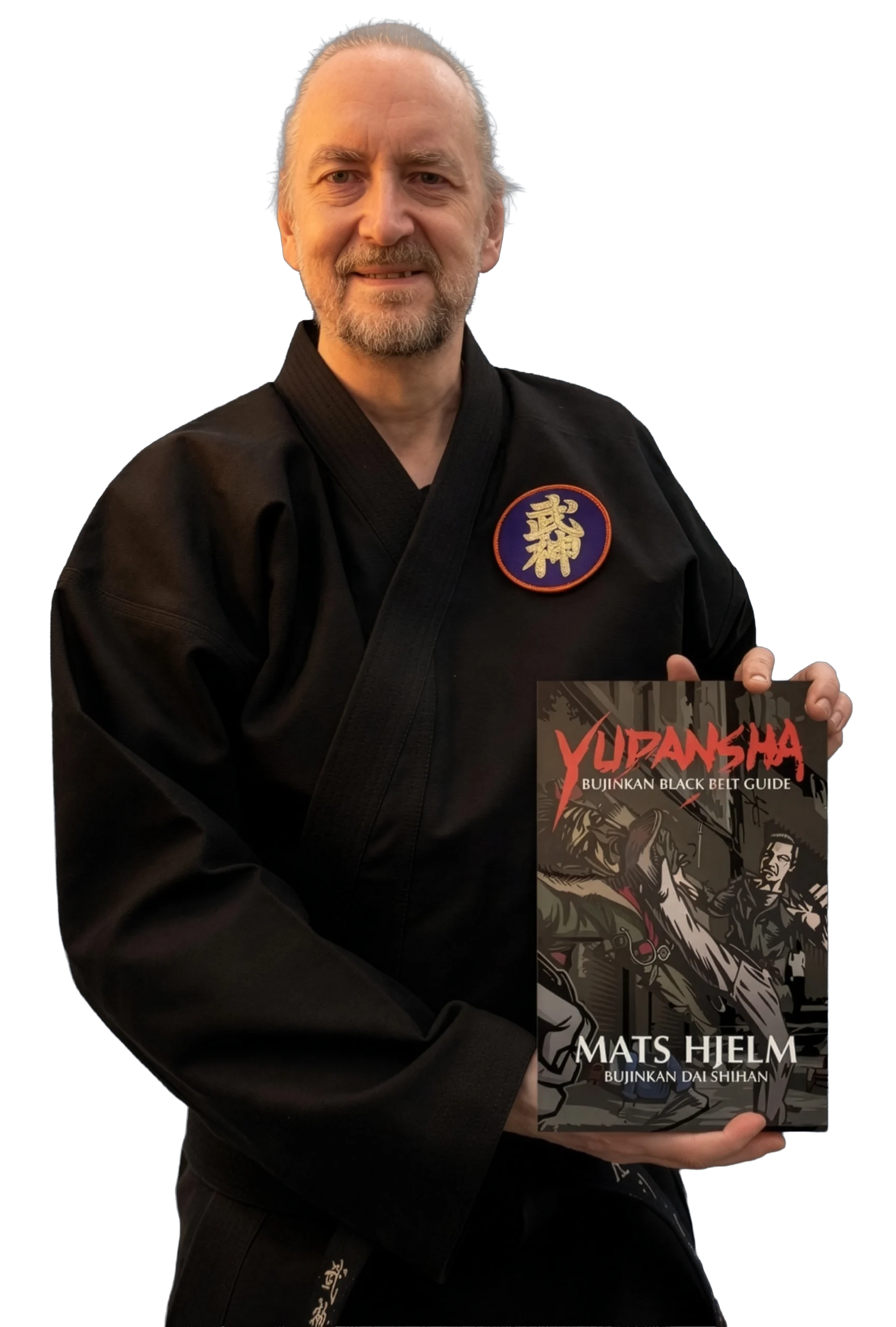
After decades of personal notes and research, I have created one official book:
武神館有段者の案内所
BUJINKAN YUDANSHA NO AN’NAISHO
YUDANSHA – BUJINKAN BLACK BELT GUIDE BOOK
This comprehensive guide covers the Ten-Chi-Jin Ryaku no Maki and all essential Taijutsu techniques from beginner level up to Shidōshi (5th Dan). It contains everything you need to know to become a qualified instructor in Bujinkan Dojo.
Available now at Lulu.com or directly from me. Visit the dedicated Yudansha website for more details and to purchase your copy.
Ninjutsu Book References
Below is a curated list of important Ninjutsu-related literature and reference books.
The original historical documents of the Bujinkan schools are not stored in a museum — they are preserved by Hatsumi Sōke himself. Most of this historical material has already been published by Hatsumi Sensei in his English-language books, so those titles are not included here. The list below contains only books published in Japanese.
- Old Documents (This is known documents you can find in museums)
- General Books (This is published books of interest)
Historical Background
According to the Nihon Shoki, the first recorded ninja-like act took place during Emperor Jinmu’s eastern expedition (667–661 BCE), when Michiomi no Mikoto used Chōka Tōgo (a form of deception) to defeat thieves. Another tradition credits En no Gyoja Ozunu (born around 634 CE) as the founder of both Kōga-ryū and Iga-ryū ninjutsu, linking its origins to his Shugendō practices. Some theories suggest he studied the Shichisho or Tonkōjutsu, but the truth remains a mystery.
Because literacy was extremely rare in historical Japan, ninjutsu practitioners relied almost entirely on memory — a skill that seems almost impossible in today’s short-attention-span world. Without written records, they memorized techniques thoroughly and passed them down orally from master to student. It was only during the peaceful Edo period, when wars finally ceased, that many practitioners gained the time to learn reading and writing, allowing them to begin documenting their inherited knowledge.
Ninjutsu’s secretive tradition meant that masters carefully observed and tested their children or chosen students for the potential to uphold the art. If no worthy successor was found, they would often destroy their documents to prevent the knowledge from falling into the hands of malicious individuals. In addition, countless records were lost through natural and human-made disasters — earthquakes, fires, negligence, and the devastating firebombings of World War II.
As a result, only a fraction of the original ninjutsu knowledge has survived to the present day.
Old Documents
Below is a list of the surviving historical documents and reference books related to ninjutsu.
- 万川集海 Ban Sen Shūkai
All Rivers Gather Sea
In Enpō 4 (1676), Fujibayashi Yasutake of Iga detailed the secret transmissions and autumn tools of forty-nine schools of Iga-ryū Ninjutsu. Adding the military essentials secret record, it becomes twenty-two volumes. The structure consists of:
① the origin and development of Ninjutsu,
② the spiritual code of ninjas,
③ methodology,
④ positive ninja and negative ninja,
⑤ Ninjutsu and astronomy/weather,
⑥ Ninjutsu tools (ninja tools, climbing tools, water tools, opening tools, fire tools). It is considered the most important among ancient Ninjutsu transmissions. Besides the Cabinet Library copy, the Ōhara copy, Fujita copy, Ōzawa copy, Takimoto copy, Sawamura copy, Okimori copy are known. - 正忍記 Shōnin Ki
True Ninja Record
In Enpō 9 (1681), the military scholar Natori Sanjūrō of the Kishū-ke wrote it. Known as one of the three major Ninjutsu transmission books, it is a secret transmission of the Kishū-ke. The Tokyo Ueno Library copy is a beautiful manuscript on torinoko paper. Unlike Man Sen Shūkai, it is not systematic, writing the techniques of Kishū-ryū Ninjutsu as various transmissions and explaining the mindset for their application. - 忍秘伝 Nin Hiden
Ninja Secret Transmission
Hattori Hanzō Masanari wrote it in Eiroku 3 (1560). As a transmission book of Iga and Kōga schools, it is a fundamental document alongside Man Sen Shūkai and Shōnin Ki. Regarding the establishment year, there is a theory that it was not Eiroku 3 but written in the Tokugawa period, in the later years of Hanzō. - 差出帖 Sashidashi Chō
Submission Ledger
Genbun 3 (1534). A record of residents of Kōga. - 忍術秘書応義伝之巻 Ninjutsu Hisho Ōgi Den no Maki
Ninja Secret Book Righteous Secret Transmission Volume
A scroll transmitted in the house of Yorimiya Shihō no Suke, one of twenty-one of the Kōga Gojūsanka and one of the nine Kitayama families. Written in Tenshō 13 (1585), copied by Takenaka Hanbei in Tenshō 14 (1586), and further cleanly copied in Tenpō 12 (1841) by Morishige, a descendant of the Yorimiya family, for preservation. - 伊賀者火術秘善 Igamono Kajutsu Hizen
Iga Ninja Fire Technique Secret Excellence
Kan’ei 1 (1624). A transmission book of Iga fire techniques. - 筑前筑後肥前肥後探索書 Chikuzen Chikugo Hizen Higo Tansaku Sho
Chikuzen Chikugo Hizen Higo Exploration Document
Around Kan’ei 3 (1626). A record mixing measurements and hearsay of the conditions of castles, castle towns, households, and territories in these provinces. A report of the public authority’s secret agents. - 讃岐伊予土佐阿波探索書 Sanuki Iyo Tosa Awa Tansaku Sho
Sanuki Iyo Tosa Awa Exploration Document
Around Kan’ei 3 (1626). A report of information collected by the public authority’s secret agents in Sanuki and other provinces. It reports, mixing measurements and hearsay, the conditions of castles, castle towns, households, and territories. - 忍小鏡之巻(五間忍之害) Nin Shōkyō no Maki (Goken Nin no Gai)
Ninja Small Mirror Volume (Five Spaces Ninja Harm)
In Kan’ei 12 (1635), April, a copy made in Kyōhō 11 (1726), December, of a transmission book of Matsumoto Rokueimon and a Ninjutsu book transmitted by Fukuchi Yūsui. - 軍記の巻 Gunki no Maki
Military Record Volume
In Kan’ei 13 (1636), Ukai Kurōdo Yoritsugu taught Matsuno Gennojō sixty-one illustrated methods of military meteorology observation, a copy of the scroll. - 伊賀付差出帖 Iga-tsuki Sashidashi Chō
Iga Attached Submission Ledger
In Kan’ei 13 (1636), December, three retainers of the Tsuhama Tōdō clan wrote the names of direct vassals and reported to the feudal lord. Following outside groups, cloak groups, gun groups, and residence guards, fifthly, “Ninja Group” is listed, with twenty names, stipends, and years of service recorded. The stipends are all low, and the rank of positions is junior. - 忍法秘巻 Ninpō Hikan
Ninja Technique Secret Volume
In Shōhō 6 (1647, May), Inoue Shosaeimon Masayoshi copied the secret transmission of Unshū-den Iga-ryū Ninjutsu for disciples. - 忍秘伝 Nin Hiden
Ninja Secret Transmission
In Jōō 2 (1653), March, Hattori Mino no Kami Yasukiyo wrote it, transmitted from Hattori Hanzō in Eiroku 3 (1560). - 兵法秘要竊盗之巻 Heihō Hiyō Settō no Maki
Military Strategy Secret Essentials Theft Volume
In Enpō 3 (1675), Koike Hachirōbei wrote and copied it. - 土芥冠讎記 Dokai Kan Shūki
Earth and Dust Crown Vengeance Record
Genroku 3–4 (1690–91). A directory and reputation record of daimyo nationwide at the time. It is presumed to have been compiled from secret agents’ reports, describing the personalities and private lives of 243 daimyo. - 忍大意 Nin Taii
Ninja Great Intent
A record of secret matters of Yoshitsune-ryū secret agents. A transmission book of Miu Jiemon in Kyōhō 9 (1724), August. - 忍法書 Ninpō Sho
Ninja Technique Book
Kyōhō 13 (1728). Nakatsuji Yoshiemon wrote it. It has strong mystical elements. - 忍之極意目録 Nin no Gokui Mokuroku
Ninja Ultimate Secret Catalog
In Kyōhō 14 (1729), November, Hiraiwa Zenjirō Nobutaka transmitted it. “Nin no Mokuroku” is a variant of this book. - 一子相伝 当流忍大極秘 Isshi Sōden Tōryū Nin Daigokubi
Single Heir Transmission Our School Ninja Great Secret
Iga-ryū Ninjutsu transmitted by Ryūno Hankurō Sadakatsu, Akaida Denbei Shigekatsu, and Rikusen Keiji Teru, passed to Kōyase Matayoshi in Kyōhō 16 (1731), November, by Hiraiwa Zenjirō Kurayoshi. A variant is “Tōryū Nin Gokubi Den” (1 volume). - 伊賀者由緒 Igamono Yūshō
Iga Ninja Origin
Kyōhō 20 (1735). A record of the Iga group residing in Edo. - 服部流忍法秘伝 Hattori-ryū Ninpō Hiden
Hattori School Ninja Technique Secret Transmission
Written in Hōreki 10 (1760), February, a transmission book of Hattori-ryū Ninjutsu. - 伊賀者御由緒之覚書 Igamono Goyūshō no Obegaki
Iga Ninja Origin Memorandum
Hōreki 11 (1761), September, a record of the Iga group residing in Edo. - 甲陽軍鑑的流 Kōyō Gunkan Teki-ryū
Kōyō Military Mirror School
Kansei 1 (1789), perhaps. Ōhara Suma. It has strong mystical elements. - 甲賀二十家 Kōga Nijūka
Kōga Twenty Families
Kansei 1 (1789). A record of Kōga residents. - 福島流忍術之書 Fukushima-ryū Ninjutsu no Sho
Fukushima School Ninjutsu Book
A ninjutsu book transmitted by Nojiri Jirōemon Masayoshi, a vassal of Fukushima Masanori, transmitted in Kansei 9 (1797), April, by Terasawa Naozaku and Dōkō Hiroshi, descendants of the ninth Hyōgo no Kami, and treasured by Ishikawa Yamato Genchō Mitsutoku, recopied in Bunka 7 (1810), October. - 伊賀者大由緒記 Igamono Daiyūshō Ki
Iga Ninja Great Origin Record
Kansei 9 (1797), July, Myōjō Shikinban Iga group leaders Yabe Shōemon, Yukioka Hisaemon, Matsuyama Sōhachirō reported the Iga origin to the shogunate. A copy of the origin record submitted to superior Ōkubo Genban no Kami in Genroku 5 (1692). - 甲賀忍之伝未来記 Kōga Nin no Den Miraiki
Kōga Ninja Transmission Future Record
Oral teachings of Kimura Okunosuke Yasutake, a Kōga-ryū ninja of the Owari domain, recorded by disciple Chikamatsu Hikonoshin Shigenori, copied in Bunka 2 (1805), August, by Mizuno Tadatoshi, who received it from Owari domain’s Suzuki Sadayoshi. - 伊賀問答 忍術賀士誠 Iga Mondō Ninjutsu Gashi Sei
Iga Question-Answer Ninjutsu Gashi Sei
A record of Iga-ryū Ninjutsu in question-answer format. Published around Bunka–Bunse (1804–1830). A ninjutsu commentary book in question-answer format. - 忍術水鏡 Ninjutsu Suikyō
Ninja Water Mirror
A copy of a scroll of ninpō transmitted by Niki Shinjūrō Nagamasa, given to Miroku Seisuke by Takezo Kikuma Nobumasa in the Ansei period (1854–1859). - 義経流忍術伝害 Yoshitsune-ryū Ninjutsu Dengai
Yoshitsune School Ninjutsu Transmission Harm
Yoshitsune-ryū Ninjutsu, originating from Minamoto no Yoshitsune, practiced in the Fukui domain, where ninjas passed down this ninjutsu book through generations; this book is its catalog. A transmission book of Ihara Ban’emon Yorifumi, the eighth generation from Yoshitsune. - 義盛百首歌 Yoshimori Hyakushu Uta
Yoshimori Hundred Poems
Ise Jirō Yoshimori taught ninjutsu secrets in one hundred poems. It became the origin of ninja songs later created by ninjas. - 伊乱記 Iran Ki
Iga Disturbance Record
A record of the affairs of Oda Nobunaga’s attack on Iga in the Tenshō period (Tenshō 5 = 1577). It depicts local lords vying for power after the Kamakura shogunate’s fall, including performing strange techniques like fire techniques and stratagems, and also depicts the daily life of Iga ninjas. - 忍術秘伝竊忍目錄 Ninjutsu Hiden Setunin Mokuroku
Ninja Secret Transmission Stealth Ninja Catalog
Date and author unknown. A transmission book of Akutagawa-ryū Ninjutsu. - 甲陽軍鑑 Kōyō Gunkan
Kōyō Military Mirror
Written by Obata Kanbei. - 大和志料 Yamato Shiryo
Yamato Materials
Unknown. It is said to have descriptions about Momochi Tanba. - 三河後風土記 Mikawa Go Fudoki
Mikawa Later Local Record
Unknown. It is said to have descriptions about Hattori Hanzō Masanari. - 武教全書 Bukyō Zensho
Complete Book of Military Teachings
Written by Yamaga Sokō (1622–1685). - 武術書 Bujutsu Sho
Martial Arts Book
Written by Satō Nobutake (1767–1850). - 甲賀組由緒書 Kōga-gumi Yūshō Sho
Kōga Group Origin Book
Tenpō 10 (1839), August. - 楠流火術 Kusunoki-ryū Kajutsu
Kusunoki School Fire Technique
Keiō 2 (1866). Transmission unknown. - 伊賀者火術秘書 Igamono Kajutsu Hisho
Iga Ninja Fire Technique Secret Book
Kan’ei 1 (1624). - 伊賀者火術秘伝書 Igamono Kajutsu Hidensho
Iga Ninja Fire Technique Secret Transmission Book
Kanbun 12 (1672). - 忍術伝書 Ninjutsu Densho
Ninja Transmission Book
An Iga-ryū secret transmission book. Date unknown. Many descriptions of ninja tools. Co-authored by Utsukawa Hansuke, Han’emon, Hanbei. - 出抜忍之巻 Denuki Nin no Maki
Stealth Ninja Volume
A volume of Kaji-ryū military strategy ninjutsu from the Hattori-ryū of Iga, written by Kaji Tōemigami Kagehide. Date unknown. - 軍髄応童記忍之巻 Gunzui Ōdōki Nin no Maki
Military Essence Response Child Record Ninja Volume
One volume among eighteen combined volumes. Date unknown. A secret transmission of Natori-ryū, written by Natori Sanjūrō Masazumi. - 当流忍衆覚語之抄 Tōryū Ninshū Kakugo no Shō
Our School Ninja Group Memorandum Teachings
A transmission book writing the memorandum teachings of Yoshitsune-ryū Ninjutsu. - 楠流奪口忍之巻 Kusunoki-ryū Dakukō Nin no Maki
Kusunoki School Seizure Mouth Ninja Volume
Extending to thirty-nine articles. - 草陰火沸錄 Sōin Kabairoku
Grass Shadow Fire Boiling Record
Has strong mystical elements. - 伊賀流忍術隠火之巻 Iga-ryū Ninjutsu Inka no Maki
Iga School Ninjutsu Hidden Fire Volume
Illustrations of fire tools used by Iga-ryū ninjas. - 陵問三略 Ryōmon Sanryaku
Mound Question Three Strategies
Has strong mystical elements. A secret transmission book of enemy reconnaissance. - 八門遁用之巻 Hachimon Tonyō no Maki
Eight Gates Stealth Use Volume
Has strong mystical elements. - 神伝忍術秘善 Shinden Ninjutsu Hizen
Divine Transmission Ninja Secret Excellence
Has strong mystical elements. - 竊盗秘密手鑑 Settō Himitsu Tekan
Theft Secret Handbook
A fire technique book. - 甲賀古士由緒書 Kōga Koshi Yūshō Sho
Kōga Old Samurai Origin Book
A record of Kōga residents. Written by Ukai Katsuyama. - 甲賀二十一家先祖書 Kōga Nijūikka Senzo Sho
Kōga Twenty-One Families Ancestor Book
A record of Kōga residents. - 甲賀郡古士伝 Kōga-gun Koshi Den
Kōga District Old Samurai Transmission
A record of Kōga residents. - 大吼雀問答 Daikōjaku Mondō
Great Roaring Sparrow Question-Answer
Has strong mystical elements. - 古事類苑 Koji Rui’en
Garden of Ancient Matters
In Meiji 12 (1879), a compilation department was established by the Ministry of Education, and through the hands of the Tokyo Academy and the Imperial Classics Research Institute, it reached the Jingū Office, completed in Taishō 2 (1913). A so-called official encyclopedia, divided into thirty sections such as heaven, seasonal events, earth, Shinto, emperors, official ranks, fiefs, politics, law, currency, weights, diplomacy, military and martial arts, religion, literature, rituals, etc., with general explanations and fundamental historical texts cited for each item. Separate general catalog and index exist. The cited book in this work is the military section’s espionage and stratagem compilation.
Hatsumi Books
- いま忍者 Ima Ninja 🥷✓
Now Ninja
Written by Hatsumi Yoshiaki. Published in Shōwa 56 (1981), January. Chōbunsha. The author is the 34th soke of Togakure-ryū Ninpō. - 戦国忍法図鑑 Sengoku Ninpō Zukan 🥷✓
Sengoku Ninja Technique Illustrated Guide
Supervised by Higuchi Kiyoyuki, written by Hatsumi Yoshiaki. Published in Shōwa 53 (1978), April. Shin Jinbutsu Ōraisha. The author is the 34th soke of Togakure-ryū Ninpō Happō Hikenjutsu and other eight school headships. - 戸隠流忍法体術 Togakure-ryū Ninpō Taijutsu
Written by Hatsumi Yoshiaki. Published in April 25’th Showa 58 (1983), Tsuchiya Shoten. - 君にもなれる忍者 Kimi ni mo Nareru Ninja 🥷✓
You Too Can Become a Ninja
Written by Hatsumi Yoshiaki. Published in Shōwa 59 (1984), January. Akebono Shuppan. The author is the 34th soke of Togakure-ryū Ninpō. - 半棒術・十手・鉄扇 (武道選書) Hanbōjutsu, Jutte, Tessen (Budō Sensho) 🥷✓
Written by Hatsumi Yoshiaki. Published in September 10’th Showa 59 (1984), Tsuchiya Shoten. - 棒術―写真で覚える (武道選書) Bōjutsu — Shashin de Oboeru (Budō Sensho) 🥷✓
Written by Hatsumi Yoshiaki. Published in September 20’th Showa 61 (1986), Tsuchiya Shoten. - 槍術―写真で覚える (武道選書) Sõjutsu — Shashin de Oboeru (Budō Sensho) 🥷✓
Written by Hatsumi Yoshiaki. Published in October 20’th Showa 61 (1986), Tsuchiya Shoten. - 世界のマーシャルアーツ (武道選書) World Martial Arts In The World 🥷✓
Written by Hatsumi Yoshiaki. Published in April 10’th Showa 62 (1987), Tsuchiya Shoten. - 秘伝 戸隠流忍法 Hiden Togakure-ryū Ninpō 🥷✓
Secret Transmission Togakure School Ninja Techniques
Written by Hatsumi Yoshiaki. Published in Heisei 2 (1990), April. Tsuchiya Shoten. The author is the 34th soke of Togakure-ryū Ninpō.
General Books
Below is a list of published books in Japanese from the early 1900’s.
- 忍術秘録 Ninjutsu Hiroku 🥷✓
Ninja Secret Record
Written by Fujita Seiko. Published in Shōwa 11 (1936), August. Chiyoda Shoin. The author is the 14th soke of Kōga-ryū. - 法術行り方繪解 Hōjutsu okonai-kata ezetsu 🥷✓
Illustrated Explanation of the Manner of Performing the Arts of the Law
Written by Fujita Seiko. Published in Shōwa 3 (1928), October. The author is the 14th soke of Kōga-ryū. - 甲賀流忍術 Kōga-ryū Ninjutsu
Kōga School Ninjutsu
Written by Fukuyama Matsusui. Published in Shōwa 28 (1953), November. Jinrui Kagaku Kenkyūjo publication. The author is a former local police superintendent. - 忍術 Ninjutsu 🥷✓
Ninjutsu
Written by Adachi Makiichi. Published in Shōwa 32 (1957), December. Heibonsha. - どろんどろん Doron Doron 🥷✓
Doron Doron
Written by Fujita Seiko. Published in Shōwa 33 (1958), October. Nihon Shūhōsha. - 忍術 その歴史と忍者 Ninjutsu Sono Rekishi to Ninja 🥷✓
Ninjutsu: Its History and Ninjas
Written by Okuse Heishichirō. Published in Shōwa 38 (1963), September. Jinbutsu Ōraisha. Revised edition in Heisei 7 (1995). Shin Jinbutsu Ōraisha. The author is a leading ninja researcher residing in Iga, Ueno-shi. - 忍者の生活 Ninja no Seikatsu
The Life of Ninjas
Written by Yamaguchi Masayuki. Published in Shōwa 38 (1963), February. Yūzankaku Publishing. - 忍法 その秘伝と実例 Ninpō Sono Hiden to Jitsurei
Ninja Techniques: Their Secret Transmissions and Examples
Written by Okuse Heishichirō. Published in Shōwa 39 (1964), October. Jinbutsu Ōraisha. Revised edition in Heisei 7 (1995). Shin Jinbutsu Ōraisha. - あなたも忍者になれる Anata mo Ninja ni Nareru
You Too Can Become a Ninja
Written by 名和弓雄 Nawa Yumio. Published in Shōwa 41 (1966), August. Keibunkan. - 仙人の研究 Sennin no Kenkyū
Study of Hermits
Written by Chigiri Hikari. Published in Shōwa 51 (1976), August. Tairiku Shobō. The author is a member of the theater association. - 忍者と盗賊日本史・陰の人物誌 Ninja to Tōzoku Nihonshi, In no Jinbutsushi
Ninja and Thief Japanese History: Chronicles of Shadow Figures
Written by Tobe Shinjūrō. Published in Shōwa 53 (1978), October. Nihon Shoseki Kabushiki Kaisha. Paperback edition in Shōwa 61 (1986), Kawade Shobō Shinsha. - 戸隠の忍者 Togakure no Ninja
Togakure Ninjas
Written by Shimizu Basan. Published in Shōwa 57 (1962), August. Ginga Shobō. - 甲賀の歳月 Kōga no Saigetsu
Kōga’s Years
Edited by Yuzuki Tōsō. Published in Shōwa 62 (1987), March. Seishūdō. The author manages Seishūdō bookstore and Kōga Ninja Village. - 忍者の履歴書 Ninja no Rirekisho
Ninja’s Resume
Written by Tobe Shinjūrō. Published in Shōwa 62 (1987), April. Asahi Shinbunsha. - 考証忍者物語 Kōshō Ninja Monogatari 🥷✓
Verified Ninja Stories
Written by Tamura Eitarō. Published in Shōwa 63 (1988), August. Yūzankaku Publishing. The author is a historian. - 歴史グラフィティ 忍者 Rekishi Gurafiti Ninja
Historical Graffiti Ninja
Published in Heisei 5 (1993). “Shufu to Seikatsu” Seikatsu Series. Shufu to Seikatsusha. - 萬川集海全八巻 Man Sen Shūkai Zen Hachi Kan
All Rivers Gather Sea Complete Eight Volumes
Written by 名和弓雄 Nawa Yumio, supervised by Ishida Yoshito. Published in Shōwa 51 (1976). Seishūdō. Modern language translation pocket book. - 真説・日本忍者列伝 Shinsetsu Nihon Ninja Retsuden
True Tales: Japanese Ninja Chronicles
Written by Koyama Ryūtarō. Published in Shōwa 39 (1964). Arechi Shuppansha. - 秘録戦国忍者 Hiroku Sengoku Ninja
Secret Record Sengoku Ninja
Written by Miyazaki Atsushi. Published in Shōwa 49 (1974). Tōen Shobō. - 異聞忍者列伝 Ibun Ninja Retsuden
Unusual Tales Ninja Chronicles
Written by Nomura Toshio. Published in Shōwa 59 (1984). Shunyōdō Bunko.
There is obviously many more books written after the ones listed above provided by Bessatsu Rekishi Dokuhon published in 2001, but I prefer to have older sources than newer sources just repeating older sources. Below is a few books I think should be included.
- 忍術の研究 Ninjutsu no Kenkyū 🥷✓
The Study of Ninjutsu
Written by 名和弓推 Yumio Nawa. Published on November 1, 1972 - 忍術秘伝 Ninjutsu Hiden 🥷✓
Ninja Secret Transmission
Written by 奥瀬 平七郎 Heishichirō Okuse. Published in Showa 34 (1959), by Bonbonsha - 忍法・超人の世界 Ninpō Chōjin no Sekai 🥷✓
Ninja Techniques: The World of Superhumans
Written by 大平陽介 Ōhira Yōsuke. Published in January, 1975 - 忍法 Ninpō 🥷✓
Ninja Way
Written by 戸部新十郎 Tobe Shinjūrō. Published in August 1978 - 忍びと忍術 Shinobi to Ninjutsu 🥷✓
Shinobi (Ninja) and Ninjutsu
Written by 山口正之 Masayuki Yamaguchi. Published in July 2003 - 忍者・忍術 Ninja / Ninjutsu 🥷✓
All Things About Ninja
Written by 山北篤 Atsushi Yamakita. Published in December 2004 - 図解隠し武器百科 Zukai Kakushi Buki Hyakka 🥷✓
Illustrated Encyclopedia of Hidden Weapons
Written by 名和弓推 Yumio Nawa. Published in May 1977 - 忍の里の記録 Shinobi no Sato no Kiroku 🥷✓
Record of the Ninja Village
Written by 石川正知 Ishikawa Masatomo. Published October 1982 - 忍者の誕生 Ninja no Tanjō 🥷✓
The Birth of the Ninja
吉丸雄哉・山田雄司 編 Edited by Yūya Yoshimaru and Yūji Yamada. Published March 2017 - 九鬼嘉隆と九鬼水軍 Kuki Yoshitaka to Kuki Suigun 🥷✓
Kuki Yoshitaka and the Kuki Naval Forces
Written by 豊田祥三 Shōzō Toyoda. Published September 2023 - 三秘伝合本 San Hiden Gōhon 🥷✓
Combined Volume of the Three Secret Transmissions. Bansenshukai, Shoninki, and Ninpiden
Edited by 中島篤巳 Nakajima Atsumi.