戸隠流 TOGAKURE-RYU
The meaning of Togakure-ryu Ninpo-taijutsu is…
戸 TO : door
隠 GAKURE : hidden, concealed
流 RYŪ : style, current, flow
忍 NIN : conceal, endure, secrete
法 PŌ: law, method, rule, system
体 TAI : body, substance, object
術 JUTSU : art, skill, technique, magic
戸隠流 (Togakure-ryū) – Togakure school
忍法 (ninpō) – ninja art or skill
体術 (taijutsu) – martial arts or technique of the body
All put together the translation would be Togakure school of ninja martial arts.
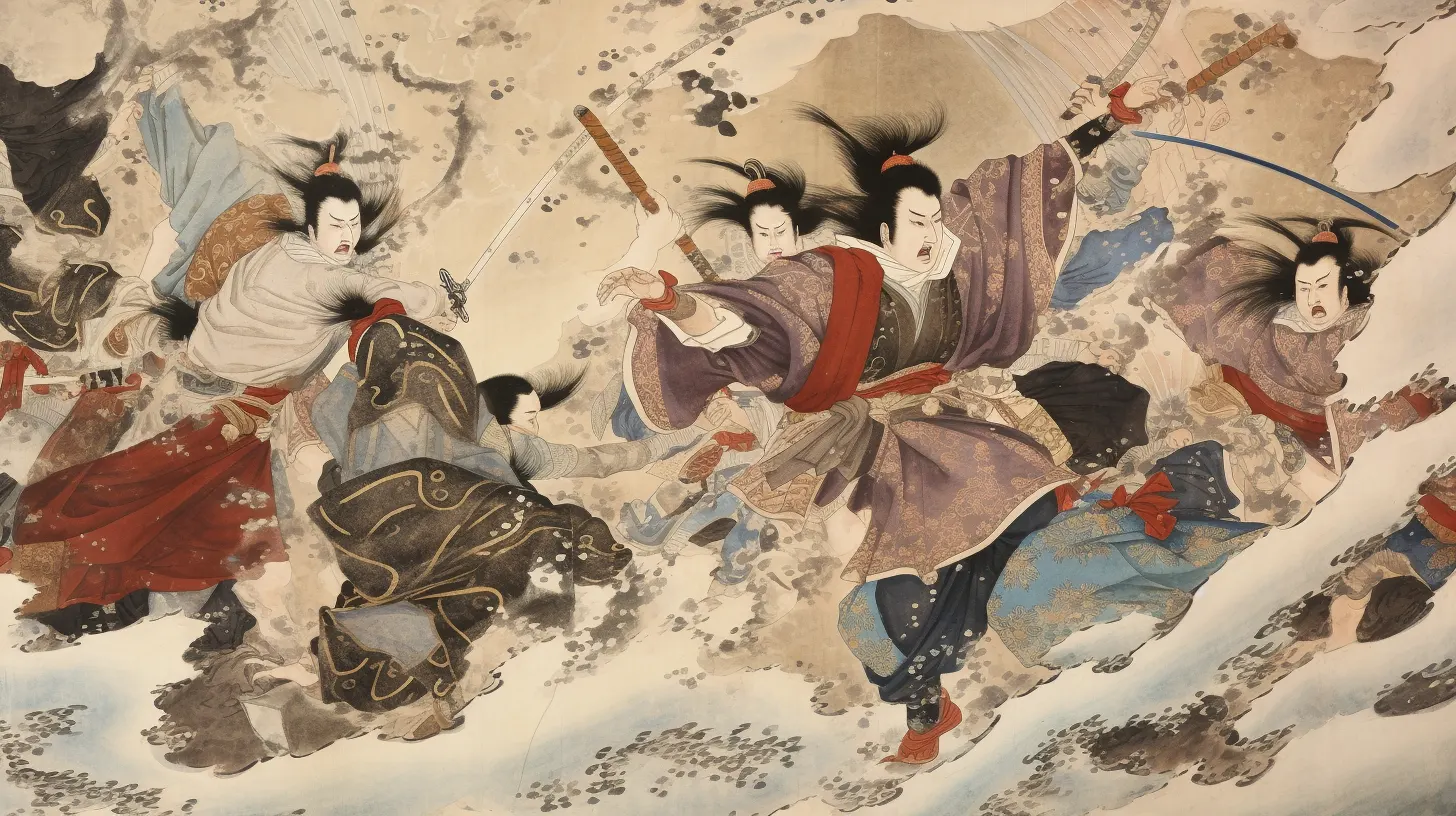
In 1182, during the Japanese Genpei War, at the end of the Heian Period, Minamoto no Yoshinaka, a general from the mountainous Nagano region of Japan, captured the capital city of Kyoto. After this victory, he found himself under attack by his cousin Yoshitsune. When Yoshitsune’s troops successfully crossed the Uji river, a key strategic defense for the capital, Yoshinaka withdrew, only to be killed as his horse fell through the ice of a frozen rice paddy.
After Yoshinaka’s defeat, one of his samurai retainers, Daisuke Nishina of Togakure Village escaped to the mountains of Iga in south central Japan. Nishina’s native village of Togakure is now known as Togakushi, Nagano, and was an early center of Shugendo training. It may be that Nishina engaged in such training, but the records of the Togakure ryu do not mention it. The mountains provided an easy place to hide from the enemy troops, who still searched for Yoshinaka’s forces. Daisuke Nishina, who subsequently changed his name to Daisuke Togakure, later became known as the first Sōke (family head) of Togakure-ryū.
In Togakure-ryu it is said that you first should study the 武芸十八般 Bugei-jūhappan the 18 martial skills to be learnt by the common Japanese warrior (bushi). Then you also study the 忍身十八形 Ninja-jūhakkei according the Togakure-ryū (see below). Together all these 36 arts is known as the 忍法三十六型 Ninpō-sanjūroppō.
忍身十八形 NINJA-JŪHAKKEI
- 体術 Taijutsu (unarmed combat, using one’s body as the only weapon)
- 剣術 Kenjutsu (sword fighting)
- 棒術 Bōjutsu (stick and staff fighting)
- 手裏剣術 Shurikenjutsu (throwing blades)
- 槍術 Sōjutsu (spear fighting)
- 長刀術 Naginatajutsu (naginata fighting)
- 鎖鎌術 Kusarigamajutsu (chain and sickle weapon)
- 火薬術 Kayakujutsu (pyrotechnics and explosives)
- 変装術 Hensōjutsu (disguise & impersonation)
- 忍び入り Shinobi-iri (stealth and entering methods)
- 馬術 Bajutsu (horsemanship)
- 水練 Sui-ren (water training)
- 謀略 Bōryaku (military strategy)
- 諜報 Chōhō (espionage)
- 隠遁術 Intonjutsu (escaping and concealment)
- 天文 Tenmon (meteorology)
- 地文 Chi-mon (geography)
- 精神的教養 Seishin-teki kyōyō (spiritual refinement)
For a whole list of the techniques in Togakure-ryū we are training in Bujinkan Dojo see this page Togakure-ryū Ninpō-taijutsu.
傳系 DENKEI
| . | 玉虎 | Yo Gyokkō / Cho Gyokkō | 618 AD – 907 AD |
| . | 異匀 | Ikai (Cho Buren) | 1056 AD |
| . | 牙門道士 | Gamon Doshi | Jiryaku 1065-1068 AD |
| . | 牙竜道士 | Garyu Doshi | Shoho 1074-1076 AD |
| . | … | Unryu Doshi | Shoho 1074-1076 AD |
| . | 八竜入道 | Hachiryu Nyudo | Yasukioeicho 1096 AD |
| . | 戸沢白雲斎 | Tozawa Hakuunsai | Heiji 1159 AD |
| . | … | Ise Saburo Yoshimoro | Heiji 1159 AD |
| 1. | 戸隠大助 | Togakure Daisuke | Oho 1161 AD |
| 2. | 志摩小三太源兼定 | Shima Kosanta Minamoto no Kanesada | 1180 AD |
| 3. | 戸隠五郎 | Togakure Goro | 1200 AD |
| 4. | 戸隠小三太 | Togakure Kosanta | … |
| 5. | 甲賀鬼三太 | Koga Kisanta | … |
| 6. | 金子友春 | Kaneko Tomoharu | … |
| 7. | 戸隠龍法 | Togakure Ryuho | … |
| 8. | 戸隠岳雲 | Togakure Gakuun | … |
| 9. | 木戸小石 | Kido Koseki | … |
| 10. | 伊賀天龍 | Iga Tenryu | … |
| 11. | 上野利平 | Ueno Rihei | … |
| 12. | 上野千里 | Ueno Senri | … |
| 13. | 上野万二郎 | Ueno Manji | … |
| 14. | 飯塚三郎 | Iizuka Saburo | … |
| 15. | 沢田五郎 | Sawada Goro | … |
| 16. | 大猿一平 | Ozaru Ippei | … |
| 17. | 十又八郎 | Kimata Hachiro | … |
| 18. | 片岡平座衛門 | Kataoka Heizaemon | … |
| 19. | 森宇源太 | Mori Ugenta | … |
| 20. | 戸田五兵衛 | Toda Gogei | … |
| 21. | 神戸青雲 | Kobe Seiun | … |
| 22. | 百地幸兵衛 | Momochi Kobei | … |
| 23. | 戸張典善 | Tobari Tenzen | … |
| 24. | 戸田盛柳信綱 | Toda Seiryu Nobutsuna | Kwanyei 1624-1644 AD |
| 25. | 戸田不動信近 | Toda Fudo Nobuchika | Manji 1658-1681 AD |
| 26. | 戸田観五郎信安 | Toda Kangoro Nobuyasu | Tenna 1681-1704 AD |
| 27. | 戸田英三郎信正 | Toda Eisaburo Nobumasa | Hoyei 1704-1711 AD |
| 28. | 戸田新兵衛正近 | Toda Shinbei Masachika | Shotoku 1711-1736 AD |
| 29. | 戸田新五郎正良 | Toda Shingoro Masayoshi | Gembun 1736-1764 AD |
| 30. | 戸田大五郎近秀 | Toda Daigoro Chikahide | Meiwa 1764-1804 AD |
| 31. | 戸田大三郎近繁 | Toda Daisaburo Chikashige | Bunkwa 1804 AD |
| 32. | 戸田真竜軒正光 | Toda Shinryuken Masamitsu [3] | b. 1824 – d. 1909 AD |
| 33. | 高松寿嗣翊翁 | Takamatsu Toshitsugu Uoh | b. 1887 – d. 1972 AD |
| 34. | 初見良昭 | Hatsumi Masaaki | b. 1931 – present |
| 35. | 筒井巧 | Takumi Tsutsui | b. 1964 – present |
Footnotes
Garyu Doshi founded Hakūn-ryū.
Tozawa Hakuunsai founded Gyokkō-ryū which later was brought into the Toda family by the 24’th Soke Toda Seiryu Nobutsuna.
24’th Soke Toda Seiryu Nobutsuna was also the 18’th Soke of Gyokko-ryu, 11’th Soke of Gyokushin-ryu, 9’th Soke of Koto-ryu and the 5’th Soke of Kumogakure-ryu. These schools had been in the Toda family previously but he was the one who brought these five schools together.
32’nd Soke Toda Shinryuken Masamitsu was his “Warrior name” and the name written in the Densho. But his real name was 戸田久次郎 Toda Hisajiro. He was also the top falconer to the Tokugawa Shogunate and a master sword instructor at the Shogunate military academy and the commander of 鳥見 Tori-Mi (secret agents), who collaborated closely with 隠密 Onmitsu (the Shogun’s secret police). It should not come as a surprise that Takamatsu Sensei protected the past grandmasters true identity by writing down fictional names. The Ninja of the old was taught not to pass on their knowledge to anyone if they did not prove to be worthy of keeping the secrets, not even their own sons. If they did not have a successor they destroyed all their documents, if someone “unworthy” learned by “mistake”, the unwritten law was that they must be killed. This is why almost all Ninjutsu schools disappeared in Japan.
33’rd Soke Takamatsu Toshitsugu was also the 27’th Soke of Kukishin-ryu and 13’th Soke of Gikan-ryu via Ishitani. And the 16’th Soke of Takagiyoshin-ryu via Fujita. Thus bringing all nine schools together, then transmitted them to Masaaki Hatsumi who founded the Bujinkan Dojo.