高木揚心流柔体術 TAKAGIYŌSHIN-RYŪ JŪTAIJUTSU
高木揚心流 Takagiyōshin-ryū is a jūtaijutsu (jujutsu) school. The techniques are designed to be applied in a very fast manner so the opponent cannot roll or escape.
高 KŌ, taka : tall, high, expensive
木 BOKU, MOKU, ki, gi : tree, wood
揚 YŌ, ageru : raise, elevate, hoist, praise, extol, fry in deep fat
心 SHIN, kokoro : heart, mind, spirit, heart
流 RYŪ, RU, nagare : style, current, flow
柔 YŪ, yawaraka : tender, weakness, gentleness, softness
体 TAI, karada : body, substance, object, reality, counter for images
術 JUTSU, sube : art, technique, skill, means, trick, resources, magic
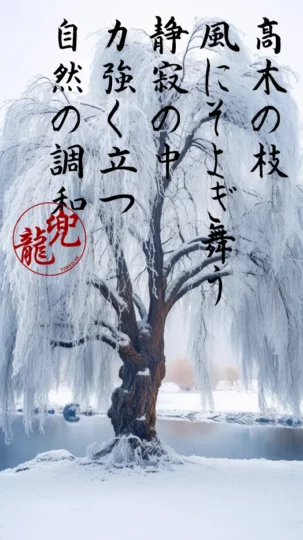
Branches of the tall tree
Sway and dance in the wind
In tranquil stillness
Standing with strength and might
Harmony with nature
There lived a monk called 僧雲龍 Abe Unryū at the foot of Mount Funagata in the Rikuzen (now Miyagi prefecture) around 12th year of Eiroku Era (1569). It is said that he was an expert of taijutsu, bōjutsu and shurikenjutsu which he learned from the secret teachings of the Amatsu Tatara Rinhō Hiden Sessho. He called his teachings Sesshō-hiden. He passed on his teachings to Itō Kii-no-kami Sukesada.
伊東紀伊守佐忠 Ito Kii-no-kami Sukesada lived in Ōshu (present day Tohoku Chiho on the northern part of Honshu). He later reorganised the techniques of Bōjutsu, Hanbōjutsu, Yarijutsu, Naginatajutsu, Kenjutsu and created 建孝流 Kenkō-ryū which contained his own style of Yarijutsu, Bōjutsu, Shurikenjutsu and Naginatajutsu based on what he had learned from Unryū. He was employed by Katakura Kojūrō (the Lord of Shiraishi castle) and a Dōjō.
THE MASTERS OF TAKAGIYŌSHIN-RYŪ
1. 高木折右衛門重俊 Takagi Oriemon Shigenobu (born 1625, other sources say 1635) was a samurai of the Shiraishi domain in Ōshu (today Miyagi Prefecture). He was the second son of Inatō Sanzaemon who was a sword instructor and retainer of the Katakura Kojūrō. At a young age he traveled to Akita in Yamagata prefecture to study short sword techniques of the Mutō-ryū and spear techniques from Kyōchi-ryū. He travelled around Japan for 7 years on his Musha Shugyō, before returning back home to Shiraishi. He studied with many …
- 稲富主膳(折右衛門の父) — Inatomi Shuzen (Oriemon’s Father)
- 武滕段右衛門(武滕流鎗術) — Mutō Dan’emon (Mutō-ryū Sōjutsu)
- 太田次郎右衛門(柳生流) — Ōta Jirōemon (Yagyū-ryū)
- 柳生市之進(柳生流) — Yagyū Ichinoshin (Yagyū-ryū)
- 上田吉之丞重時(馬術) — Ueda Kichinojō Shigetoki (Bajutsu)
- 天狗山伏(越中立山禅定) — Tengu Yamabushi (Etchū Tateyama Zenjō)
- 山鹿追遙軒(軍学兵法) — Yamaga Chūyōken (Gungaku Heihō)
- 村岡兵武(火砲術) — Muraoka Hyōbu (Kahōjutsu)
- 村岡重左衛門(鎖鎌兼) — Muraoka Jūzaemon (Kusarigama Ken)
- 工藤權八郎(十手術) — Kudō Gonpachirō (Jūttejutsu)
In the second year of Shōhō (around 1645) he entered the Dōjō of Itō when he was 20 years old. After this he kept the Sumō torikumi (grappling bouts) in mind and developed 12 omote techniques, 24 ura techniques and 12 sabaki techniques and called his style Takagi-ryū. In the eleventh year of the Kanbun reign (1671) he passed on his style which also included Jūjutsu, Bōjutsu, Sōjutsu and Naginatajutsu to his adopted son Takagi Umanosuke Shigesada.
2. 高木馬の輔重貞 Takagi Umanosuke Shigesada (born in 1656) was an extraordinarily large man by Japanese standards, standing 206 cm tall—roughly 6 shaku 8 sun—and possessing legendary strength said to equal that of five ordinary men. His favored weapon was a massive bō staff measuring 3.6 m long (2 ken) and 24 cm thick (8 sun). He famously dueled 竹内久吉 Takeuchi Hisayoshi, the third sōke of Takeuchi-ryū (born circa 1602, died 1671 at age 69), in a dramatic mismatch reminiscent of David versus Goliath: the towering youth (no older than 14 or 15 years old at the time, given the roughly 54-year age gap between them) faced a diminutive opponent who stood less than 145 cm tall (4 shaku 8 sun) and was described as having only the strength of an average man. Despite his overwhelming physical advantages, Takagi Umanosuke was defeated and subsequently became a student of Takeuchi Hisayoshi, immersing himself in the Takeuchi-ryū Koshi-no-mawari techniques. He later integrated these teachings into his own martial system, which he named Takagiyōshin-ryū, and passed the lineage on to his son, Takagi Gennoshin Hideshige.[1]
3. 高木源之進英重 Takagi Gennoshin Hideshige died a young man so we don’t know much about him. But we know that had inherited the school from his father and had his own Dōjō. He often invited Ōkuni Kihei Shigenobu the 15’th Sōke of Kukishin-ryu to teach his students Bōjutsu. It is said he had a friendly match with Shigenobu. It turned out that Takagi-ryū had better Jūjutsu and Kukishin-ryū had better weapon techniques. They decided that it was necessary for both schools to adapt their respective schools’ curricula. Some years later Gennoshin fell ill and asked Shigenobu to preserve his tradition for the future. He soon later died young.
4. 大国鬼平重信 Ōkuni Kihei Shigenobu was the also 15’th Sōke of Kukishin-ryū and a master of many arts. Since they had established that Takagi-ryū had better Taijutsu and Kukishin-ryū had better weapon techniques he passed on the school as Hontai Takagi Yōshin Ryū Jūjutsu with the Kukishin-ryū Bōjutsu, Yarijutsu and Naginatajutsu together to his son Ōkuni Yakuburō Nobutoshi. He passed on the older Kukishin traditions to Ōtone Sakon Yasumasa (see more here).
5. 大国八九郎伸俊 Ōkuni Hachikurō Nobutoshi the son of Kihei seems to be the originatior of 高木流捕棒序 Takagi-ryū Toribō according this Makimono.
There is not much history written down of the masters until Yagi Ikugorō Hisayashi.
13. 八木幾五郎久喜 Yagi Ikugorō Hisayashi was a samurai of the Akō domain. He had three students that he passed on his teachings to. They where Fujita Fujigorō Hisayoshi, Ishitani Takeo Masatsugu, and Ishibashi (Inoue Yūtarō (or Kumatarō)?). Ishibashi line soon died out without successors. But Fujita and Ishitani was passed on to

| 14. 藤田藤五郎久吉 Fujita Fujigorō Hisayoshi 15. 水田芳太郎忠房 Mizuta Yoshitarō Tadafusa | 14. 石谷武甥正次 Ishitani Takeoi Masatsugu (~1860s–1905) 15. 石谷松太郎隆景 Ishitani Matsutaro Takekage (~1870s–1911) |

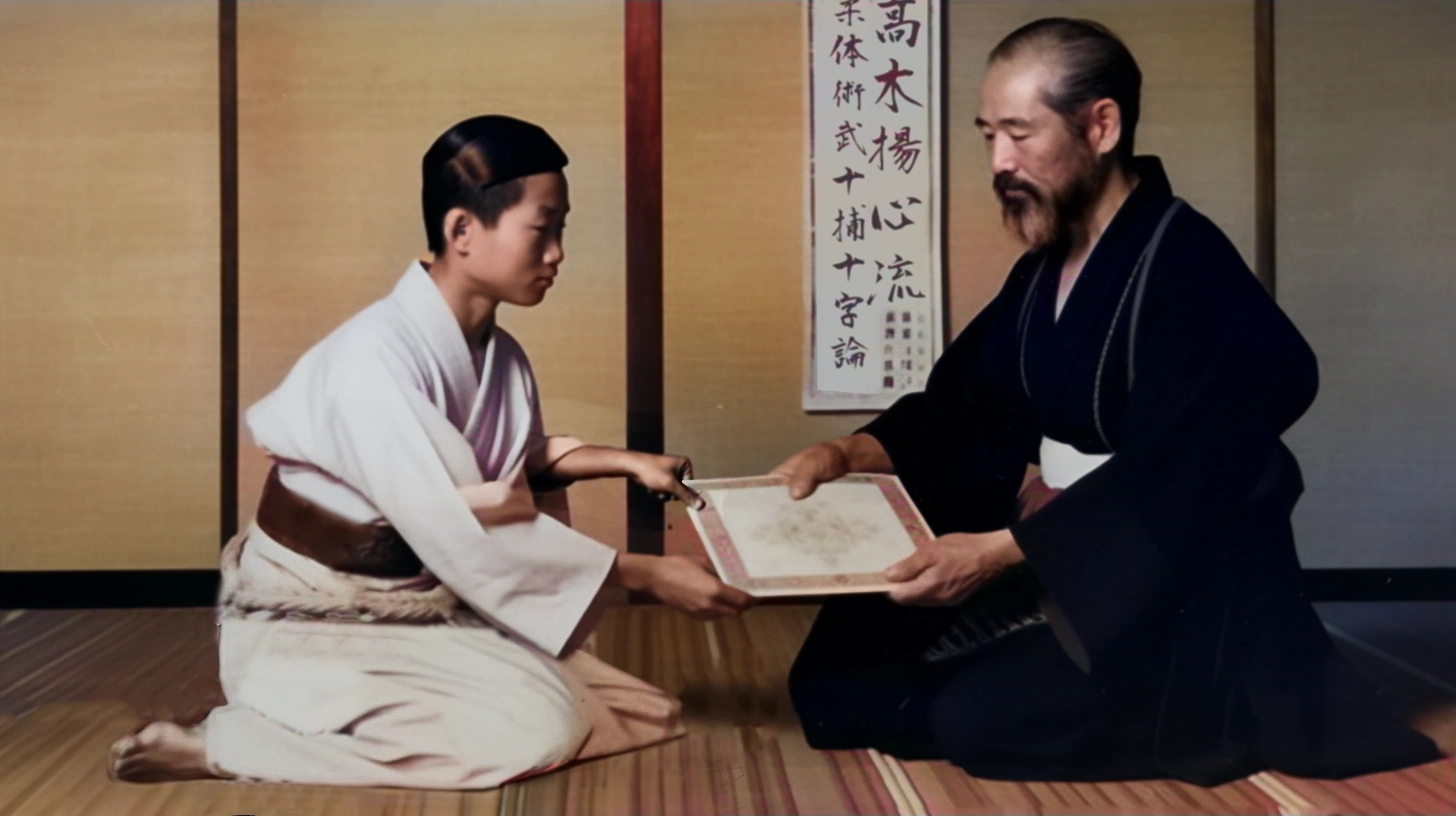
16. 高松寿嗣翊翁 Takamatsu Toshitsugu Uō received Menkyō-kaiden from Mizuta in 1901 when he was only 13 years old. And about 10 years later he also inherited Menkyō-kaiden from Ishitani. There is rumors he also learned the third line from Ishibashi (or his student), but this has not been verified. Takamatsu Sensei brought all the nine schools in Bujinkan together from his three masters Toda, Mizuta and Ishitani.
17. 初見良昭 Hatsumi Masaaki had trained Budō since child hood and had collected around 150 Dan ranks in many styles. He studied three years with Ueno Takashi learning many of the schools from Takamatsu via Ueno. Then in 1957 he met Takamatsu Sensei for the first time. From here on he travelled to him every weekend for 15 years until Takamatsu Sensei died in 1972. He was made Sōke of the nine schools by Takamatsu Sensei, and then later he founded the Bujinkan Dōjō.
傳系 TAKAGIYŌSHIN-RYŪ DENKEI
| 僧雲龍 Abe Unryū (Yeiroku era 1568-1579) 伊東紀伊守佐忠 Itō Kii-no-kami (Morisada, Sukesada or Satasada) 1. 高木折右衛門重俊 Takagi Oriemon Shigenobu (b. 1625 or 1635 – d.1711-10-07) 2. 高木馬の輔重貞 Takagi Umanosuke Shigesada (b. 1655 – d. 1746) 3. 高木源之進英重 Takagi Gennoshin Hideshige (d. 1702) 4. 大国鬼平重信 Ōkuni Kihei Shigenobu (Genroku era 1688-1704) 5. 大国八九郎伸俊 Ōkuni Hachikurō Nobutoshi 6. 大国太郎太夫忠信 Ōkuni Tarodayu Tadanobu 7. 大国鬼兵衛良貞 Ōkuni Kihei (Kihyō) Yoshisada 8. 大国与左衛門良貞 Ōkuni Yozaemon Yoshisada 9. 中山甚内定秀 Nakayama Jinnai Sadahide 10. 大国武左衛門英信 Ōkuni Takezaemon Hidenobu 11. 中山嘉衛門定賢 Nakayama Kaemon Sadasaka 12. 大国鎌治英俊 Ōkuni Kamaharu Hidetoshi 13. 八木幾五郎久喜 Yagi Ikugorō Hisayashi (Tempo era 1830-1844) |
| 14. 藤田藤五郎久吉 Fujita Fujigorō Hisayoshi 15. 水田芳太郎忠房 Mizuta Yoshitarō Tadafusa | 14. 石谷武甥正次 Ishitani Takeoi Masatsugu (~1860s–1905) 15. 石谷松太郎隆景 Ishitani Matsutaro Takekage (~1870s–1911) |
| 16. 高松寿嗣翊翁 Takamatsu Toshitsugu Uō (b. 1887 – 1972) 17. 初見良昭 Hatsumi Masaaki (b. 1931 – present) 18. 逆井則男 Sakasai Norio (2020 – present) |
– Some of the sources is from the book Classical Fighting Arts of Japan: A Complete Guide to Koryu Jujutsu (Bushido–The Way of the Warrior)
– Some sources from the book 秘伝日本柔術 Hiden Nihon Jūjutsu by 松田隆智編 Matsuda Ryūchi)
– Some sources is from Budō Shiraishi Ei books originally written by Mamiya Hyoemon as Takagi Oriemon telling his stories to Lord Katakura returning from his Musaha Shugyō.
– Some sources are also from Ueno Takashi 20th Anniversary Book
- We can speculate how a boy no older than 15 years old would behave against a 56 year older experienced warrior in a duel. Most of these facts is verified by the Takeuchi-ryū documents (Page 37-38 of the book 秘伝日本柔術 Hiden Nihon Jūjutsu by 松田隆智編 Matsuda Ryūchi). ↩︎
Pingback: KGZ Februari 2010 tema = Takagiyōshin-ryū + Bōjutsu | Kaigōzan dōjō